

Beyond Basic Safety to Becoming a Virginia Hunter
By Ron Messina
A raft of mallards rocket into the cove, dark silhouettes against the brightening sky. With a whistle of wings, they tilt down, splashing into the water next to a spread of battered wooden decoys. Hidden in the reeds 30 yards off, a skiff with a massive punt gun bolted to the gunnel waits, the men crouched low, heads down. As the ducks begin feeding on wild celery, a blast from the 12-foot-long gun lights up the morning with fire, smoke, and shot. Seven ducks fly, and 33 lay dead or wounded. This was a typical market hunt in Back Bay, Virginia, in 1900.
At the turn of the 20th century, hunting in the eastern United States was a free for all. It was an era without hunting seasons, harvest limits, or wildlife laws. Market hunters harvested vast quantities of game for profit, routinely shipping barrel loads of ducks, geese, and venison for sale to posh restaurants in New York or Baltimore. Snowy egrets and herons were hunted too, their feathers destined to adorn ladies’ hats, a popular Victorian-era fashion. Wildlife populations of the day were treated as if they were inexhaustible— they were not. Inevitably, several species fell into decline.
When the passenger pigeon, a migratory bird with a population once numbering in the billions, disappeared due to overhunting in 1914, it was time for a change. Virginia politicians and hunters aligned with the Audubon Society and other early conservationists to support wildlife protection efforts. They established the Virginia Department of Game and Inland Fisheries (DGIF, now the Department of Wildlife Resources [DWR]) in 1916, a conservation agency to manage the Commonwealth’s wildlife.
Leading national conservationists of the day, including Gifford Pinchot, Teddy Roosevelt, and Aldo Leopold, began developing the North American Model of Wildlife Conservation, a framework of science-based principles of wildlife management. The North American Model ended the commercial sale of game animals. Wildlife would hereafter be held in the public trust for the benefit of all Americans. The structure taking shape around hunting as an activity also extended to the concept of keeping hunters safe while participating.
In Virginia, Hunter Education programs launched during the 1930s, intertwined with all the new ,advancements in conservation. The groundbreaking Pittman-Robertson Act of 1937, proposed by Nevada Senator Key Pittman and Virginia Congressman A. Willis Robertson, set a special excise tax on the purchase of hunting and fishing equipment to help fund state conservation agencies. This permanent influx of revenue would supercharge wildlife agencies’ efforts to develop much-needed hunter education programs. Gun safety and ethics were the topics of the first campaigns conveyed to Virginia sportsmen.
Years later, those topics would again come into focus, when in 1961 the Hunter Education program set up a six-hour voluntary hunter safety course and exam for Virginia hunters. The following hunting season saw 50 percent fewer fatalities.
The Basic Hunter Education course and exam became mandatory in 1981 for all hunters aged 12 to 15 and all new hunters purchasing a license for the first time. Since then, 1,044,000 Virginia hunters have been successfully trained.
In 1988 came another big step forward—the requirement to wear 360-degree visible blaze orange— either a hat or upper-body clothing— during most gun seasons. Hunters had previously worn red hats, with field jackets of brown, or plaid wool mackinaw coats. Blaze orange is much more visible to the human eye. The requirement had an immediate impact on safety, ultimately reducing shooting fatalities by 25 percent. In 2017, the regulation expanded to allow blaze pink as an alternative.
New Hunters, New Opportunities
Today’s Hunter Education staff at DWR consists of five full-time members located in different regions of the Commonwealth. Together, they manage more than 300 vetted, certified volunteer instructors, who DWR’s Hunter Education Program Coordinator, Jimmy Mootz, calls “the lifeblood of the team.” Many of the instructors are experts in the field they specialize in teaching.
The staff and volunteer instructors work hard to include key safety messages in every presentation of the Basic Hunter Education course, including gun safety, tree-stand safety, and ways to reduce risk in every hunting situation. They stress the importance of respect for wildlife and nature. Because of their tireless work, and that of their counterparts nationally, a famous 2011 study by the National Shooting Sports Foundation (NSSF) proclaimed, “Hunting is safer than golf,” meaning hunting has fewer injuries per capita than golf. NSSF data also found hunting to be safer than just about any other “physical” sport including soccer, football, volleyball, and bike riding.
For the first few decades of the mandatory Basic Hunter Education course, all novice hunters attended in-person classes conducted by Hunter Education program staff. In 2013, an online option for the basic hunter safety education course debuted for adult hunters, and in 2015, the option was expanded to all new hunters age 12 and over. During the COVID pandemic, and a short, temporary suspension of in-person classes, the online option increased in popularity.
Now, new hunters can choose from either in-person classes—available in every county and many cities and towns across the state—or the online course. In the 2024-25 fiscal year, 2,008 hunters attended an in-person basic hunter safety education course, while 8,436 people completed the course online.
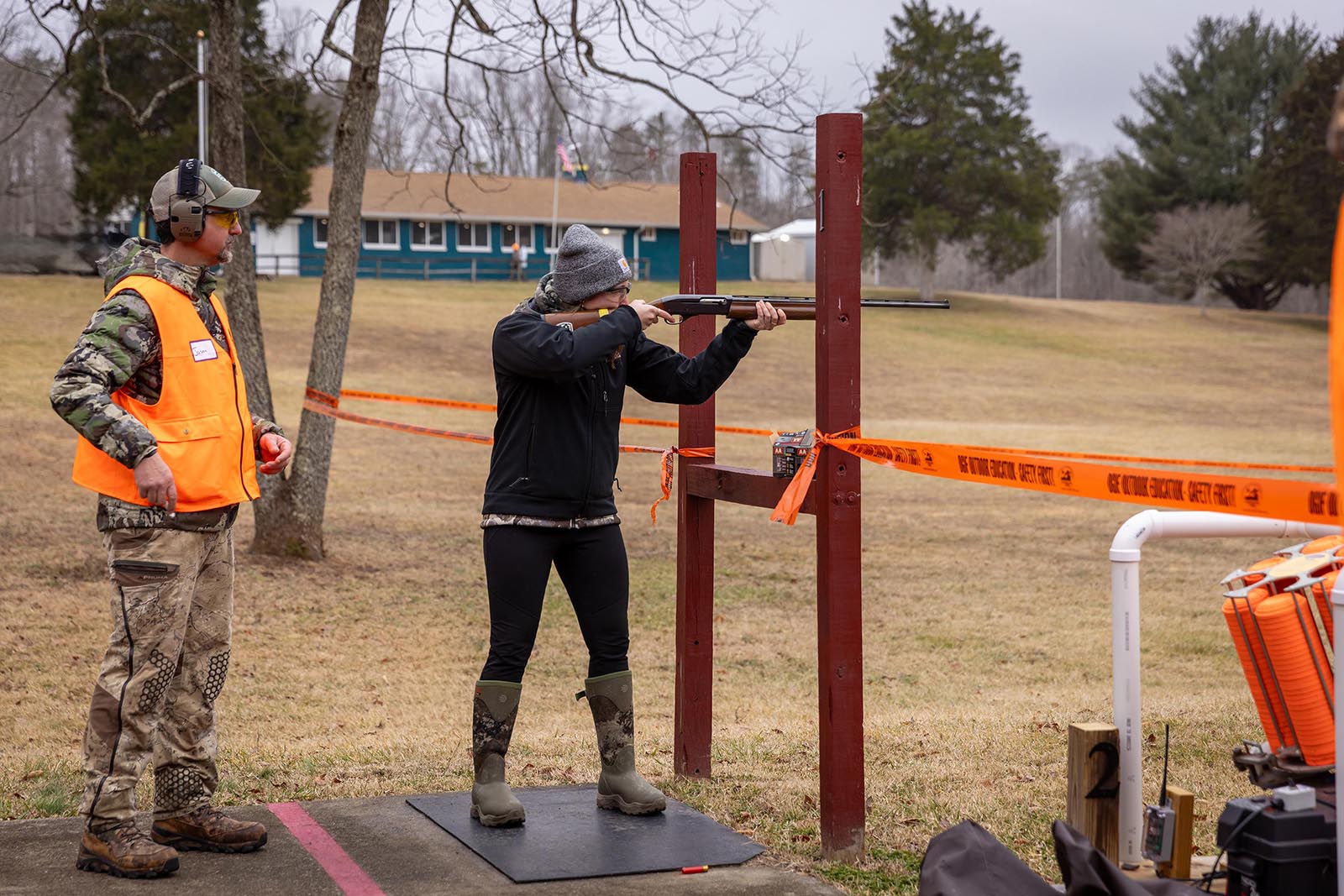
The backbone of the DWR Hunter Education Program is the network of regional coordinators and volunteer instructors. Photo by Meghan Marchetti/DWR
In recent years, factors such as urban development of hunting land, lack of access, and a shortage of mentors have impacted the recruitment and retention of hunters. In addition, many young people experience time constraints from sports and other activities that prevent their engagement. In response, the concept of hunter education has expanded beyond the tenets of basic safety and ethics. While in the past, hunters received their Basic Hunter Education completion certificate and ventured out into the woods to learn on their own, now there’s a framework of continuing education available to help keep them safe, learning, and interested.
Safety and ethics are still the mantras on which curriculums are based, but Mootz and his staff have also worked on new ideas to expand hunters’ knowledge base to help keep them hunting. They’ve reached out to adults who have great interest in learning how to hunt, but have no reference on how to begin—no hunters among their friends or families to teach them. Mootz describes them as “adult-onset hunters.” The Becoming a Virginia Hunter program was created to help them, and anyone who has a desire, to learn to hunt through a program of continuing education workshops.
Welcome to the Virtual World
A few years ago, some of the regional staff members tried something new—virtual hunter education workshops. “Our virtual workshops emerged out of our desire to have a central hub for people who wanted to become a Virginia hunter,” said Mootz. He realized that DWR just didn’t have the staff to reach every community in Virginia using only traditional, in-person teaching methods.
The virtual workshops, which take place year-round with a course available almost every week, cover a wide variety of hunting topics. Students can review the topics offered on DWR’s website, then register for the course and participate online. This allows participants to learn from an expert and acquire hunting knowledge from the comfort of their own home. “We’re becoming more deliberate, and more strategic, as we build our virtual training model. We’re building this online community of folks who want to become hunters and become better hunters,” said Mootz.
Once a student completes a certain number of virtual workshops, they become eligible to go on a “real” mentored hunt. Mootz calls the virtual trainings “game-changers,” because they open the door for novices to experience hunting in the field. “In coordination with those virtual events, our regional coordinators are putting together hands-on learning experiences, boots-on-the-ground opportunities for everyone—not just the folks in that virtual workshop, but people across the Commonwealth can come to these hands-on experiences around the state and get dirt under their fingernails and put into practice what they’re learning,” Mootz said.
The regional workshops run throughout the year, at locations all over the state, with hunting topics that change with the seasons. Past courses have included rabbit hunting, upland bird hunting, animal tracking, deer hunting, bear hunting, and more. As of this writing, DWR’s website shows registration is currently open for an introductory muzzleloader hunting workshop in Virginia Beach, a deer processing workshop in Fries, and a deer tracking workshop in Catlett, Virginia. The free, regional events fill up quickly, so it’s best to register early. In the 2024-25 fiscal year, there were 217 in-person workshops and 35 virtual offerings. And 2,319 people participated in Becoming a Virginia Hunter.
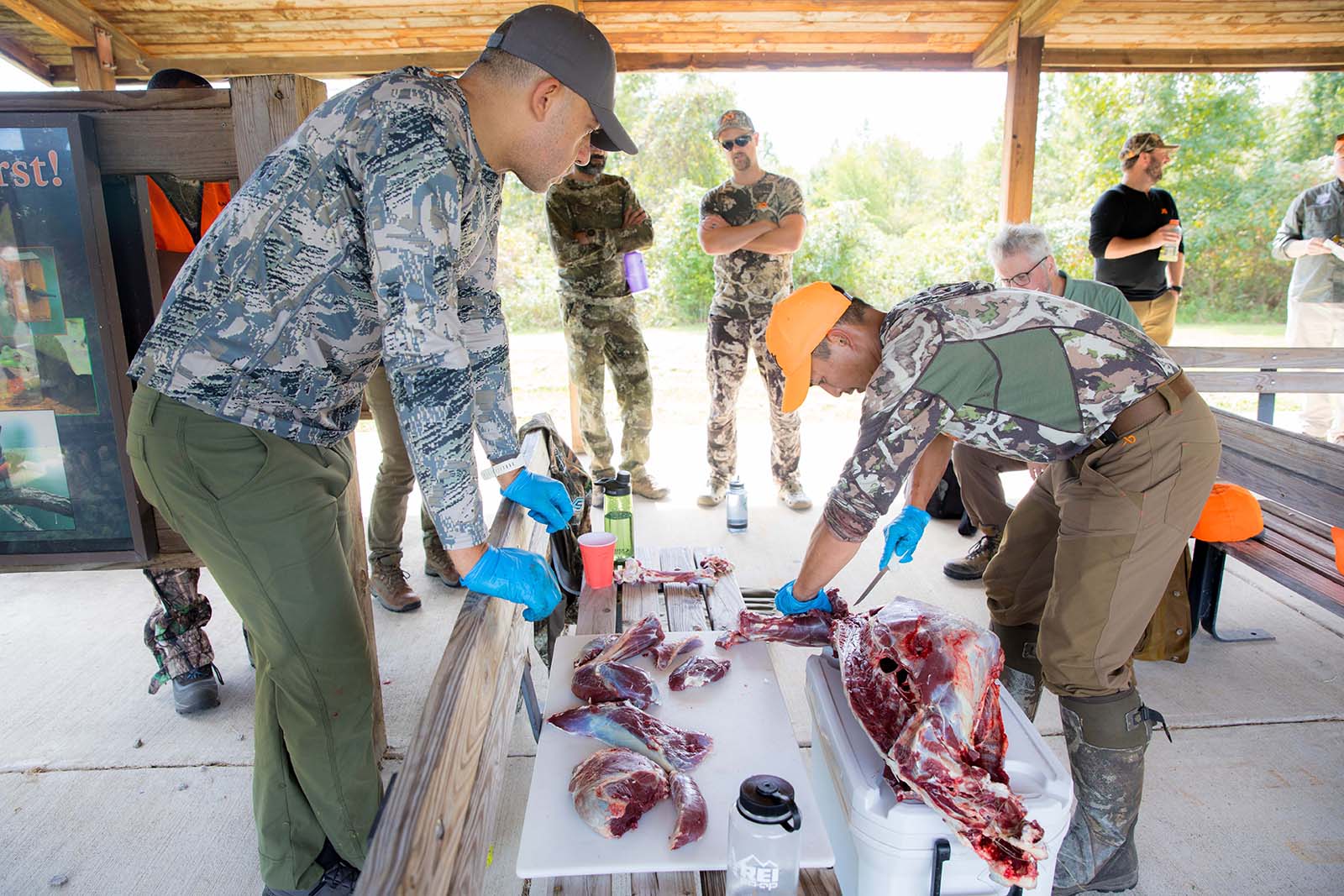
Workshops in the DWR Hunter Education Program include field processing. Photo by Meghan Marchetti/DWR
For complete beginners who may be intimidated to hunt by themselves, there’s also a mentorship program that matches a novice hunter with an experienced mentor to give them guidance and a helping hand.
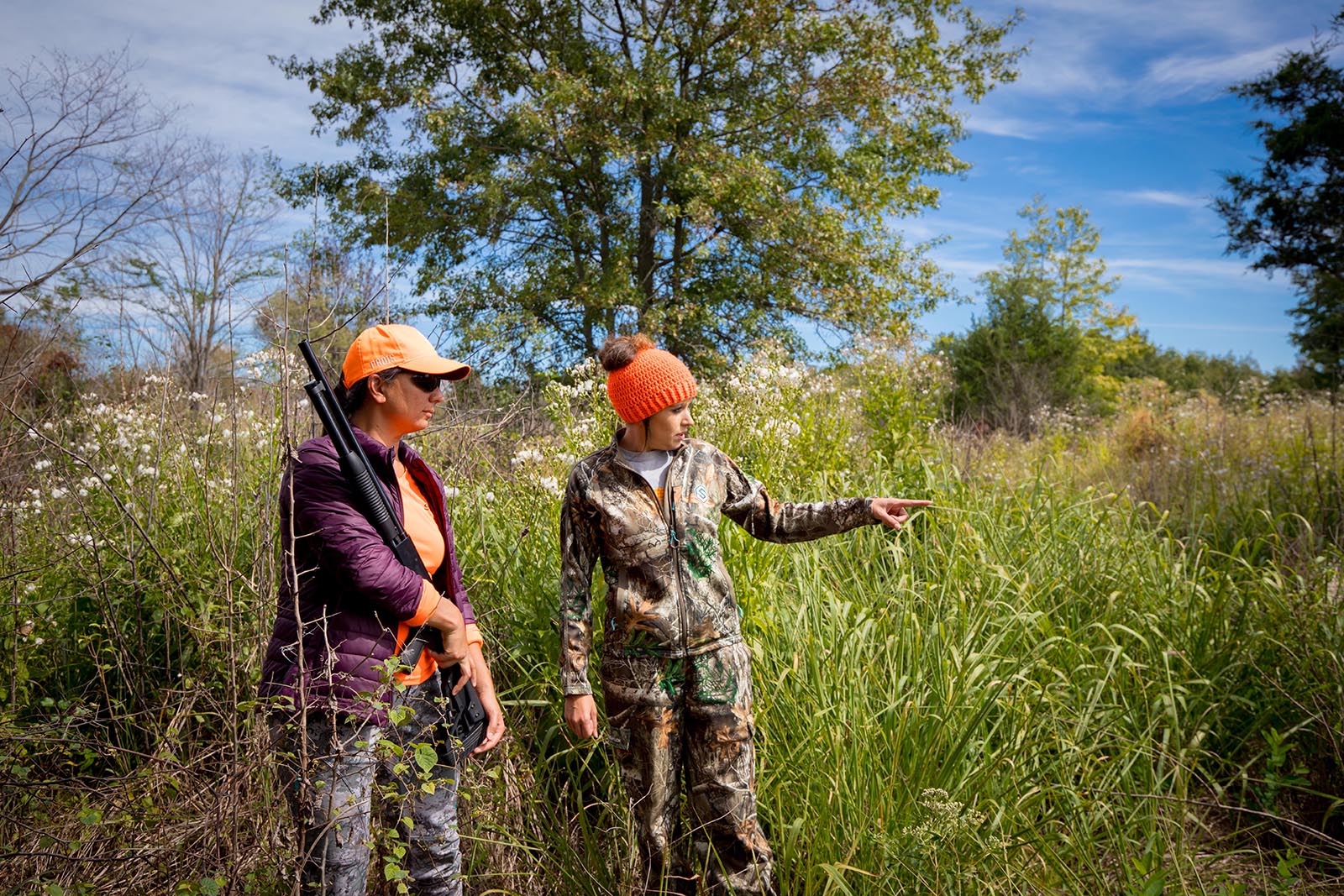
Hunter education has gone from the classroom to the field with workshops and mentor programs. Photo by Meghan Marchetti/DWR
“They’re able to go on a hunt with an experienced mentor, hopefully be able to harvest some wild game, and we’re going to help them process that wild game,” Mootz said. “We’re trying to give the new hunter opportunities to connect with us in a six-month to a year-long period, so that they never feel like they’re on their own trying to learn this themselves. We want to walk them through this process, and at the end of it, they’re a Virginia hunter.”
In addition, DWR began a Virginia Outdoor Women program in 2024 with the goal to help women feel comfortable and confident in the outdoors no matter their experience level. The program offers a variety of workshops on topics such as hiking, fishing, archery, hunting, and more.
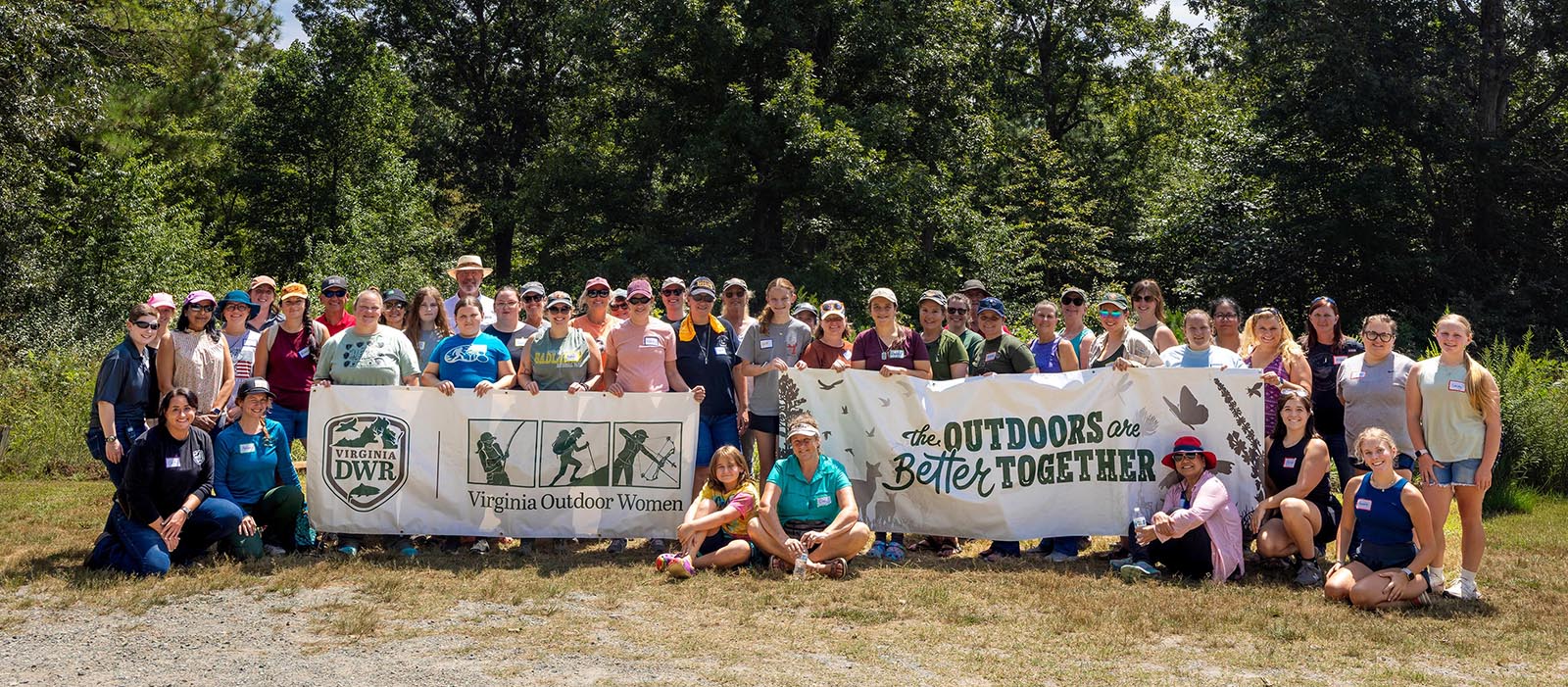
The Virginia Outdoor Women program helps women learn to enjoy the outdoors safely. Photo by Meghan Marchetti/DWR
Together, they’re all part of the new Becoming a Virginia Hunter program that takes educating hunters well beyond those first lessons on ethics and safety.
Finding Knowledge and Community
One sunny day in September, I witnessed exactly what Mootz was talking about at the Hunter Skills Workshop Event at Holiday Lake 4-H Educational Center, yet another learning opportunity DWR offers beginning/intermediate hunters. The Hunter Skills Workshop is an intensive, weekend-long camp focusing exclusively on teaching hunting skills, safety, and general hunting knowledge—basically a masterclass on hunting.
In every direction there’s a cluster of activity. Just down the hill at archery class, volleys of arrows thud into bullseyes as the students practice their compound bow skills. At a nearby target range, shotguns punch holes into targets as turkey hunters pattern their guns. There are workshops on tracking animals, outdoor survival, predator hunting, modern muzzleloading, wild game cooking, decoy carving, and more. “It’s like drinking from a firehose,” one participant says.
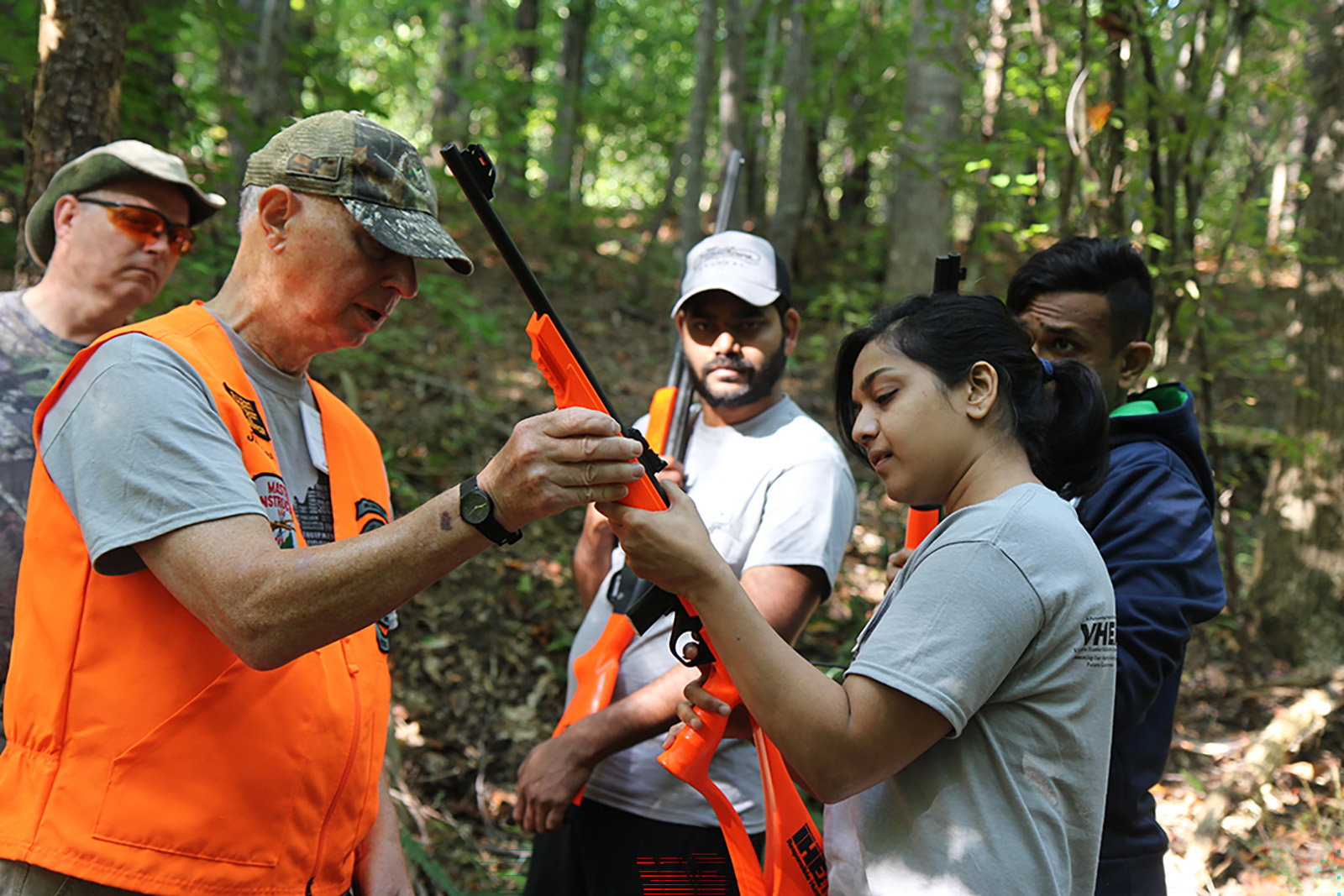
Participants at the Hunter Skills Weekend not only learn essential techniques, but also enjoy the camaraderie with others. Photo by David Hart
Wendy Hyde, a longtime hunter and DWR-certified volunteer, runs this camp, as she’s done for years. She cut right to the chase about what makes this camp so great.
“The best thing about this program is that people are trying things they’ve never tried before and making connections—we see a lot of folks that come and don’t know anybody. By the end of the weekend, they’re partnered up with three or four people that they’ve bunked with, and they’re swapping contact information,” said Hyde.
Nearby, under a pavilion, camp co-manager Aaron Grimsley instructs a group of youth and adults on the essentials of turkey hunting, going over everything from bug spray and camouflage to turkey calls and shotgun chokes. I ask him, “How does it feel to teach these novice hunters?”
“I’m passing along a lifetime of knowledge and safety to others. It means the world to me,” he responded. His heartfelt reply would be echoed over and over by the volunteers I spoke to, each sharing a passion for safety and promoting an activity that many consider a spiritual endeavor.
“We all had those people in our lives that gave us opportunities in the outdoors. Now we’re that generation,” said Mootz. “We’ve lost a generation or two of people passing that heritage of conservation on to the next generation. It’s so vitally important for us, to accept that mantle, that role of responsibility, and pass it on to others.”
Maria Dicristoforo is a young volunteer instructor teaching squirrel hunting. She came to the camp four years ago, the very definition of an adult-onset hunter. In her words, she was “totally new to hunting.” She met three other young women at that first camp and they formed what they call the “Group of Four.” They became good friends and have since hunted and socialized together often. Each of them has become a certified hunter education instructor.
“I think weekends like this really expose you to that wider hunting community,” said Dicristoforo. “The output of weekends like this is meeting other women who are also new to hunting, developing that sense of community, and getting out and finding mentors that I frankly couldn’t find online.”
Dicristoforo credits one person in particular as a big inspiration. “I think having women like Wendy [Hyde] as instructors in the program made it a more feasible reality for us to become instructors ourselves—so thank you Wendy!” she said.
Sam Alvarez decided to try the camp on the recommendation of his hunting mentor. He’d gone hunting several times without harvesting any game. “My family was never a hunting family,” Alvarez relayed. But he always loved the outdoors, and had a desire to learn what hunting was all about. Alvarez enrolled in a morning squirrel hunt that Dicristoforo helped guide, and took his first animal, a squirrel.
“It’s a pretty awesome moment—absolutely so much fun just being outdoors,” he said, smiling, as he watched an instructor demonstrate a skinning technique. The next day, the group sampled the squirrels the class harvested, along with a variety of other animals, at a wild game luncheon.
“It does not come easily. There’s a lot of art and science to hunting,” said Mootz. “It has to be earned. But boy when you earn it—all of the nuances and all of the special little things that go into it—it is a rewarding experience.”
It’s clear the instructors here have successfully passed down the excitement of hunting to a new cadre of beginning hunters. The Hunter Skills Workshop may be over, but each month there will be another workshop somewhere in Virginia, or a virtual clinic, or a hunter safety exam. The Hunter Education staff and volunteers will do what they have been doing for almost a hundred years, help hunters enjoy the outdoors and do it safely.
But there’s still more for them to find, according to Mootz, something that hearkens back to hunting’s earliest days. “When I came into the position, I wanted to take a holistic approach to not just educating hunters,” Mootz said. “I want people to be able to look back, and say, ‘I started as a hunter a few years ago, and now I’m a conservationist.’ Being a hunter is just one part of being a conservationist.”
Ron Messina is the former video production manager at the Virginia Department of Wildlife Resources. He is an avid outdoorsman who loves to write about his adventures in the field.
Explore DWR’s Hunter Education Program
• Information for new hunters
• The Basic Hunter Education Course
• Virginia Hunter Education Outreach & Workshops
• Virginia Outdoor Women
Legal Disclaimer:
EIN Presswire provides this news content "as is" without warranty of any kind. We do not accept any responsibility or liability for the accuracy, content, images, videos, licenses, completeness, legality, or reliability of the information contained in this article. If you have any complaints or copyright issues related to this article, kindly contact the author above.
