

By Maj. Benjamin Hughes
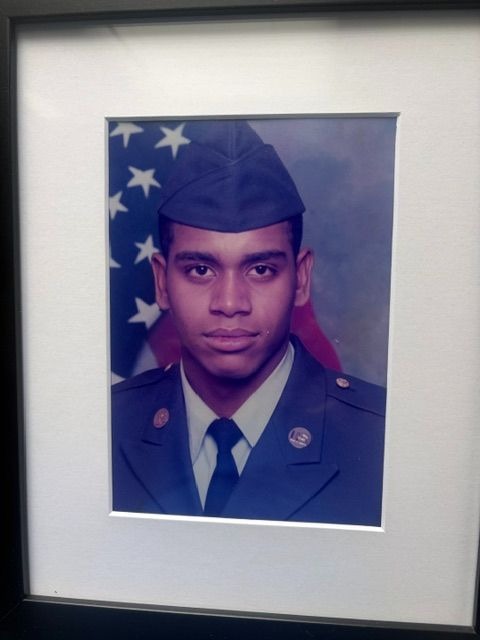
BALTIMORE — After nearly three decades in uniform, the Maryland National Guard’s senior enlisted leader is retiring. Spanning four military occupational specialties, a combat deployment, and culminating with the highest enlisted position in the state, Maryland Army National Guard Command Sgt. Maj. David C. Harry’s military career was not defined by rank or ribbons, but by the people around him.
He credits his success to his family, the mentors and leaders who shaped his journey, and to those he influenced along the way. Guard members would approach him years later to share how a simple conversation or piece of advice stayed with them and helped guide their path.
“I definitely made it a lot farther than I ever thought that I was going to,” said Harry. “When looking at the significant achievements, it is the relationships that I’ve built over 29 total years. It is littered with the people that you work with, and you hope that you left a lasting impact. And it’s just the routine conversations, because you see something in them that they may not see in themselves, or you understand there is a way forward for them to get an opportunity, or you have the ability to impact their environment. So those are definitively things that I’m super proud of when I look back on it now.”
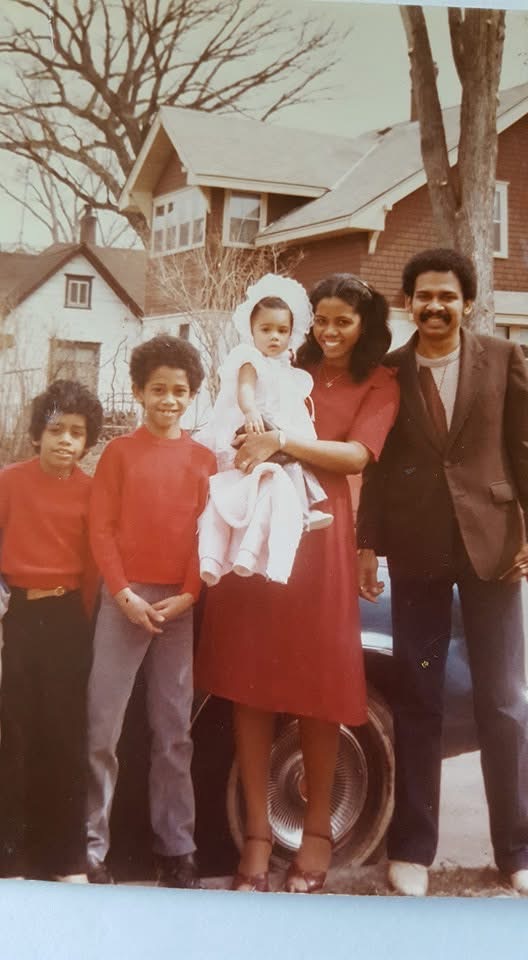 Those personal connections, he said, have become some of the most meaningful measures of his service. Harry’s beginning started thousands of miles away, far beyond the communities he would one day lead and serve. His parents started their family in the country on South America’s North Atlantic coast. Born in Georgetown, Guyana, his family immigrated to the United States in 1979 after his mother earned a scholarship to the University of Minnesota. She arrived alone, later bringing her husband and two babies to the United States, where they lived in student housing while she attended school full-time. Both parents worked low-wage jobs to make ends meet and to create opportunities for Harry and his two siblings.
Harry recalled, as an adult, visiting where his parents were from and seeing the reality of their poverty firsthand. Everyone was living in crowded spaces with limited resources, so he understood how life was shaped by uncertainty and drove his family to succeed.
“My parents were dirt poor,” said Harry. “We’re talking outdoor outhouses, six people sleeping in a room. They came from very, very humble beginnings. So when there’s no safety net, you have to make it, because this is your only chance, your only opportunity. Necessity is a hell of a motivator.”
Eventually, his mother built a successful career and now serves as a director of a retirement community in Bethesda, Maryland, while also co-owning a disability transportation business with his father. His brother is an executive with Microsoft, managing a major federal account and his younger sister has established herself as a successful human resources professional.
He became a lifelong Minnesota Vikings fan, before his family moved to Maryland when Harry was in 4th grade. In high school, he balanced academics with athletics, running cross country and track alongside his older brother, eventually winning a state championship at Quince Orchard High School. Like many teenagers, he tested boundaries at times, but his parents’ expectations remained constant. The Army Core Values shaped Harry’s character long before he took his oath of enlistment.
“My parents ingrained loyalty, duty, respect, selfless service, honor, integrity, and personal courage, but we didn’t call it those by names,” said Harry. “Still, it was there. You do things the right way. You do them because you’re supposed to.”In 1997, he enlisted in the active-duty Army, completing training at Fort Jackson, South Carolina. He served on active duty with the 551st Signal Company and later with the 8th Army in South Korea before transitioning to the Maryland Army National Guard. There, he moved across four specialties: paralegal, medic, supply sergeant, and logistics noncommissioned officer.
“I look at the steps that I took in taking different jobs and assignments, and I had a very nonlinear route,” said Harry. “Every time I went into a different job, it felt like it was a brand new challenge. And, each time I asked myself, ‘Am I up for this?’ And every one of those jobs was completely different, not even close to the same.”
That willingness to step into the unknown shaped his leadership style and prepared him for complex assignments across the force. His roles included operations positions at the battalion and state levels, leadership within the 1297th Combat Sustainment Support Battalion, and key staff positions that influenced training and readiness across the Maryland Guard. During his time as quota source manager with the G3, he helped expand access to professional military education and secured additional funding for the state.
“It was one of my favorite assignments,” said Harry. “We were having a high level of impact by being able to enroll soldiers to maximize the throughput of schools and increase funding for the state. And we were largely successful and routinely top three in the country.”
Harry deployed in support of Operation Iraqi Freedom from 2007 to 2008, even though he was not initially slated to go. His oldest son, Devin, had been born just a few years earlier with Down syndrome, and the realities of caring for a child with special needs were still new and demanding. His son’s mother, Tamara Singleton, was on the deployment roster, so Harry volunteered in her place so she could remain home.
“I had requested to go in her place, because they desperately needed medics, and they had an abundance of HR professionals,” said Harry. “After some back and forth with leadership, ultimately, the brigade commander weighed in, and I ended up going.”
That decision set the course for him, and he would soon be asked to take on even greater responsibility, serving as a detachment first sergeant with the 158th Cavalry outside Baghdad, even though he had just been promoted. During the deployment, his unit was tasked with training corrections officers in Iraqi prisons, a mission that required flexibility and leadership under evolving conditions. That adaptability, he said, is what makes the National Guard unique.
“Guardsmen are being relied upon for everything, everywhere,” said Harry. “It makes me extremely proud to be a Guardsman. We are the unicorn. There’s nothing else in the world like that. Anytime a state or national leader has an issue, they call the Guard. You know why? Because we can do it. Because we bring all of the skill sets, and I mean, literally everything. Between what we bring from our military duties, everybody brings their civilian skill sets and it is truly amazing.”
Harry eventually rose to the rank of command sergeant major of the Maryland Army National Guard and later became the senior enlisted leader for the entire Maryland National Guard, advising senior leadership on matters affecting both Soldiers and Airmen.
Working alongside Maj. Gen. Janeen L. Birckhead, commander of the Maryland National Guard, he helped guide the force through years of transformation, from regular overseas operations to domestic response missions, such as COVID-19, civil disturbances, and natural disasters. He also played a role in refining systems that impact enlisted Soldiers, including promotion processes and professional development pathways.
“There’s so many things I just absolutely love about the Guard that I will miss,” said Harry. “If there’s a better way to do things, we do that. We tend to listen regardless of rank and we’ve been able to divorce ourselves from this is the way we’ve always done it.”
Harry says his leadership skills stem from his strong people skills, which start with listening. Taking the time to understand a person’s challenges before trying to solve them started with him as a supply sergeant and readiness NCO. Harry built a reputation for being approachable, so he would regularly help soldiers navigate personal crises, from financial hardship to family and relationship issues. He says that is true across the force.
“You become that first call,” he said. “When something goes wrong in a soldier’s life, they’re not calling their employer; they’re calling you. They’re looking for guidance, for support, for someone who’s going to listen. It’s one of the things I’m truly proud of.”
In senior roles, he mentored junior enlisted soldiers and noncommissioned officers, helping them see opportunities they had not considered and guiding them toward promotions, schools and even commissioning paths. He also worked with Soldiers, Airmen, and senior leaders, bridging communication across the force and advocating for policies that improved career progression and access to training.
“You have to understand what motivates people,” he said. “Because ultimately, one of the jobs as a senior leader is to keep our Soldiers and Airmen engaged in the organization. Talking to people, truly listening, trying to identify problems, and being sincere about trying to find a solution are 100% those soft skills.”
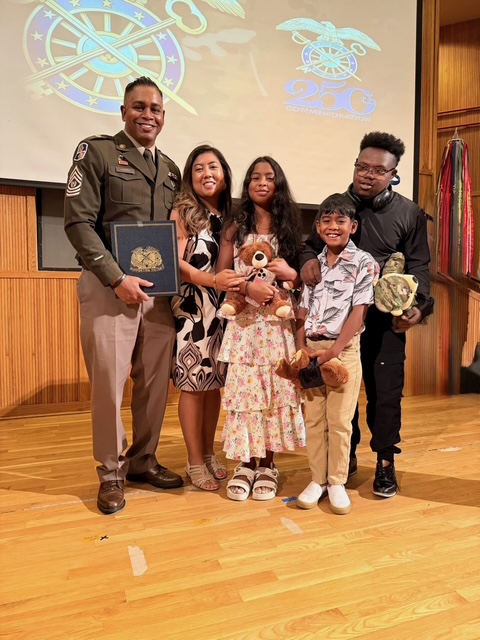 In retirement, Harry will pursue a second career in real estate and draw on the soft skills he developed, but he said his focus is shifting toward his family. He and his wife, Analiza, a dual military partner serving at the National Guard Bureau, have spent years balancing service commitments with raising their children, often living apart during the workweek and reuniting on weekends. They reside in York, Pennsylvania, with their three children. Harry describes Devin as his hype man, who remains highly active in sports, theater and school activities, including the Special Olympics. His daughter, Isabella, excels in competitive dance and his youngest son, David Jr., participates in multiple sports, including wrestling, football, and track. Harry is looking forward to attending many more of those extracurricular activities.
“I‘ve loved my job. It’s been a phenomenal, incredible ride with the organization, and I could not be happier,” said Harry. “But at the same time, it’s a lot of weekends, it’s a lot of weeks of travel, and it’s a lot of time away from the family. When I look forward, what makes me happy is the ability to spend time with my family. I’m super excited to be in a position now where I will be able to be there more often and plan to be
