

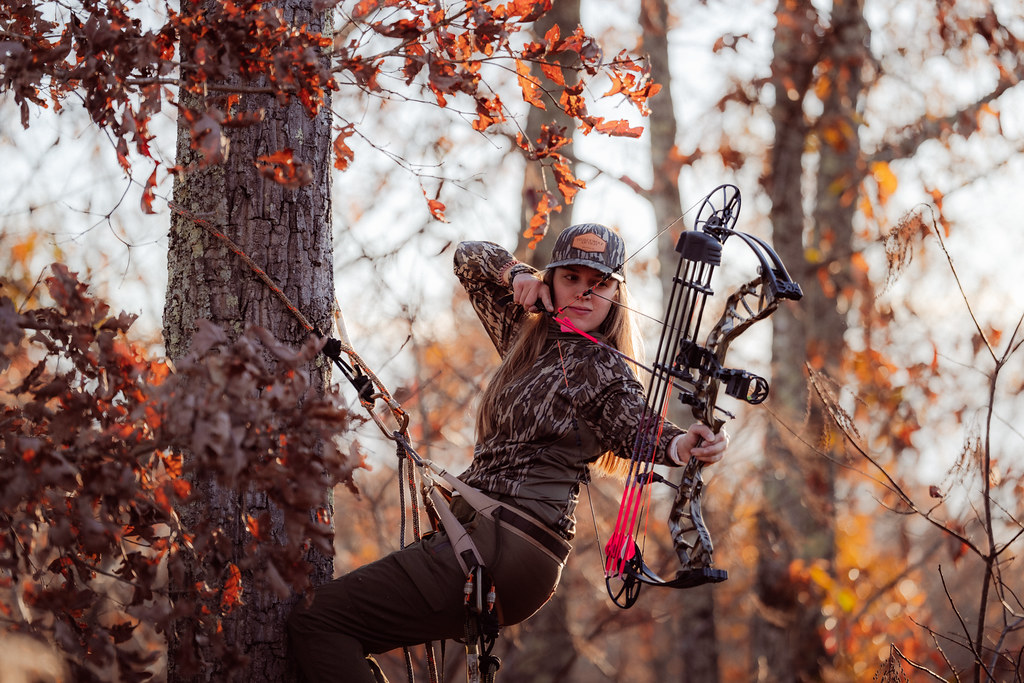
Hunting saddles are gaining popularity for bow and firearms hunters and offer an added level of safety precaution while used in tandem with a linesman’s rope.
As Maryland’s fall deer hunting seasons reach peak activity, the Maryland Department of Natural Resources urges hunters to know and follow tree stand safety guidelines before leaving the ground. The two-week firearm season for white-tailed and sika deer opens Saturday, November 28, and runs through Saturday, December 12, with an estimated 45,000 to 55,000 hunters heading afield. Additional opportunities for deer hunters using archery, muzzleloaders, and firearms will continue at various times into the winter.
Many hunters in pursuit of deer spend the season hunting from an elevated platform. Sitting in a ladder stand, hang-on stand, climber, or other elevated platform helps broaden a hunter’s field of view and aids in concealment. While elevated stands offer advantages, they also present a risk.
An analysis of Maryland Natural Resources Police hunting incident reports in the past five years shows that tree stand falls account for the overwhelming majority of accidents: 43 of 76 total hunting incidents (56.6 percent) were tree stand falls. They resulted in one death and nine injuries severe enough to require transport to shock trauma. Overall, Maryland hunters are about four times more likely to be injured in a tree stand fall than in a firearm-related incident, with 97 percent of those falls occurring while climbing or due to equipment failure.
The Maryland Hunter Safety Education Program emphasizes the importance of safe tree stand hunting practices, advising any hunter who hunts from an elevated position to wear a full-body harness that meets current industry standards recognized by the Treestand Manufacturer’s Association. A full-body harness, also known as a fall-arrest system, keeps the wearer tethered to a tree in the event of a fall or mechanical failure. Fall hazards vary by equipment, so hunters should match their safety gear to their preferred tree-climbing method.
Hunters should follow these practices for the various methods of elevated hunting:
Ladder and Hang-On Stands: Install a vertical lifeline equipped with a Prusik (sliding) knot before climbing so you remain tethered to the tree continuously from the moment you leave the ground until you return.
Climbing Stands: Keep your harness tether connected to the tree, even while climbing up and down. Ensure your tether is positioned at or above eye level to reduce the amount of slack in your line. Unique to climbing stands, hunters should also connect the top and bottom platforms with an “umbilical” line or strap so the two halves stay together.
Tree Saddles: Follow the Tree Stand Safety Association’s (TSSA) ABC’s of Hunting Saddle Safety and ensure a connection via tether, linesman’s rope, or both, 100 percent of the time.
A: Always inspect your equipment and practice at ground level
B: Buckle on your hunting saddle securely
C: Connect to the tree before you leave the ground and slow down
D: Destination – Share your location for each hunt
Before going afield, hunters should inspect their equipment for signs of disrepair in addition to inspecting trees for suitability. Only attach stands to living, healthy trees. Preset stands should be inspected for wear caused by UV exposure, weather, falling branches, tree growth, and animal or pest damage. Metal components should be inspected for rust and structural damage, paying special attention to vinyl- or PVC-coated cables which can hide corrosion or signs of structural failure.
Wearing a backpack or carrying gear while climbing is dangerous and can hinder the hunter’s ability to maintain three points of contact or safely navigate from steps into stand position. Half of all tree stand falls in Maryland in the past five years occurred while hunters were ascending or descending. Instead of carrying gear up a tree, hunters should use a haul line to safely raise a bow, backpack, or unloaded firearm into the stand. Hunters can affix these to their stands permanently to avoid carrying extra gear into the woods.
Hunters should also understand the risks of suspension trauma. Even when a harness successfully stops a fall, hanging by a harness mid-air can cut blood flow to the legs. Suspension relief straps are commercially available or built into manufactured harnesses, allowing the user to step into a loop to relieve pressure temporarily and allow time to call for help.
Hunters who are uncomfortable with heights, have limited mobility, or don’t have access to elevated hunting platforms should consider hunting from ground level. Staying on the ground can be just as effective as being elevated if using ground blinds, hiding in natural brush cover, or employing spot-and-stalk techniques.
Before getting in a tree this hunting season, hunters can brush up on safe practices by completing the free online treestand safety course offered by the Treestand Manufacturer’s Association. Advanced hunter safety courses – including an in-depth course on treestand safety – are offered by the Maryland Department of Natural Resources. Hunters can browse and register for courses on the DNR website.
